Can one second be a sufficient lapse to inform on the earthquake impact and potential damage? At Campi Flegrei caldera, a densely urbanized area of southern Italy, the answer is yes.
A new study shows that the very first second of shaking recorded by a seismic station already provides useful information about an ongoing earthquake in the Campi Flegrei. The research was carried out by Valeria Longobardi, Simona Colombelli and Aldo Zollo from the Department of Physics “Ettore Pancini” at the University of Naples Federico II, Italy, and was published in Scientific Reports, Nature Portfolio.
Campi Flegrei is one of the widest and most inhabited calderas on the planet. And it is far from dormant. Through cycles of bradyseism, the ground slowly lifts and subsides, reminding everyone living above it that the volcano is still active. In recent years, this restless behavior has been marked by an increasing number of earthquakes, often felt distinctly by the local population. The rapid uplift affecting the area (up to 2-3 cm/month) has already caused damage to structures and infrastructure, heightening the need for deeper knowledge and more effective risk management. In such a context, every second matters.
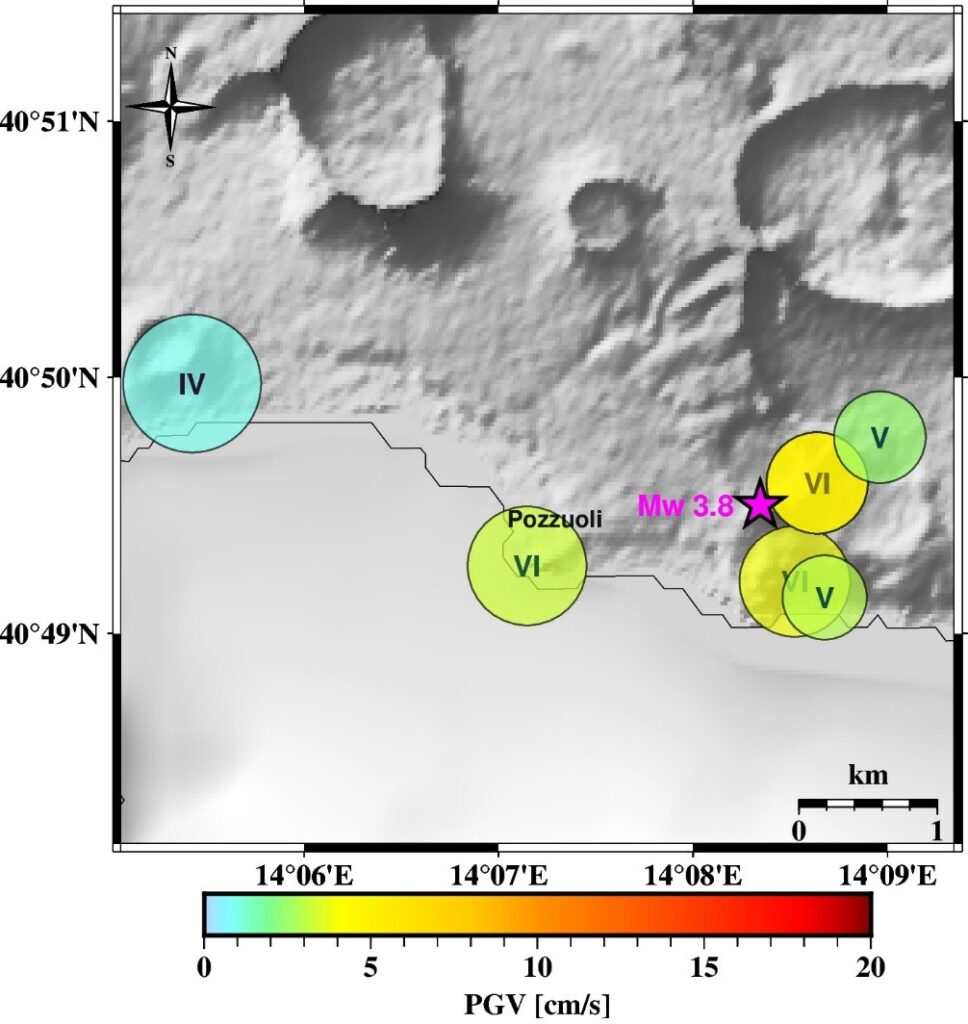
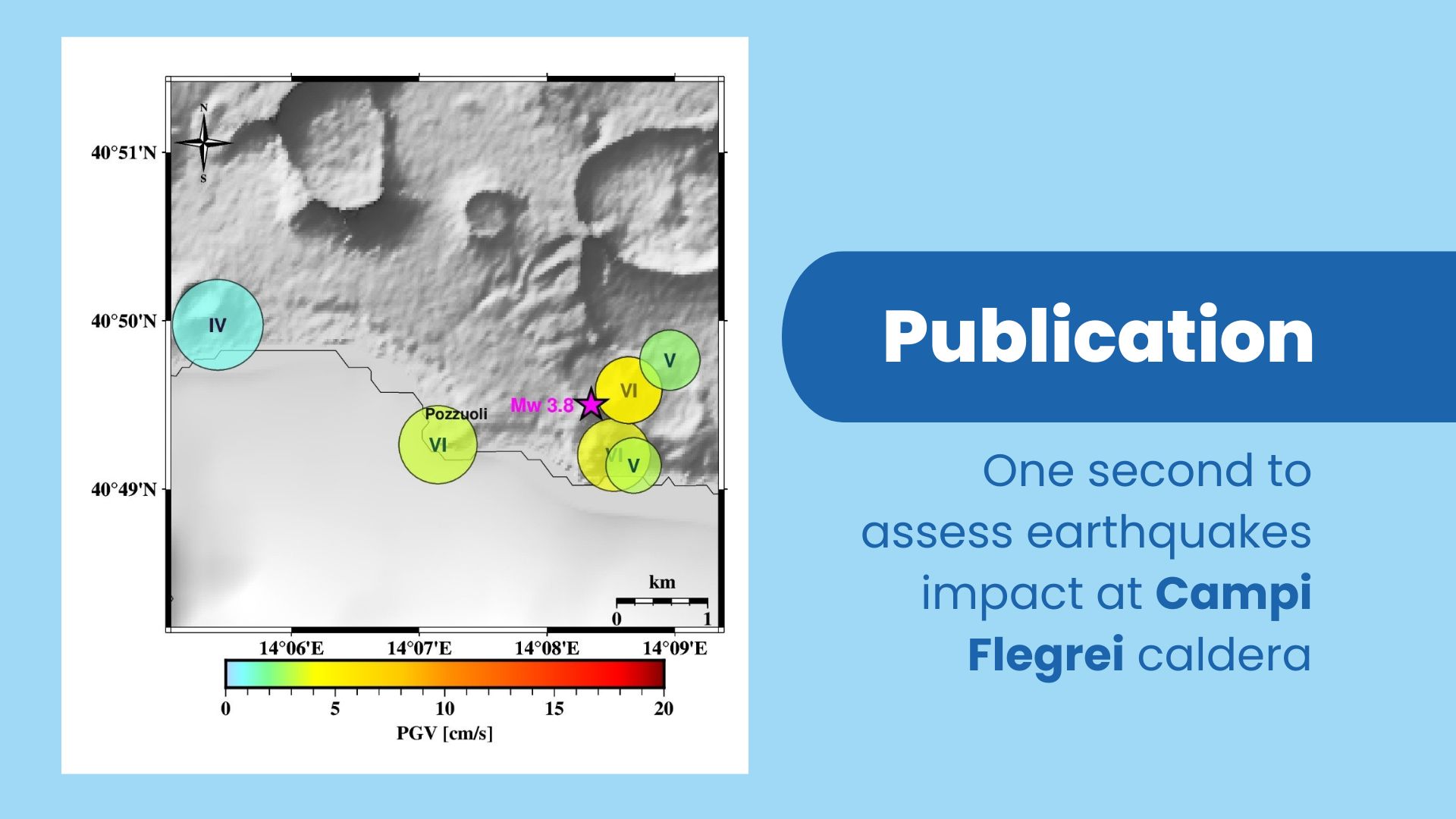
The recently published study shows that useful information can be extracted extremely quickly after an earthquake occurrence: using only the first second of the seismic signal, the proposed system can estimate how strong the earthquake is, how intense the shaking may be, and which nearby area may need attention first. In the framework of GOBEYOND, the first real time seismic antenna has been installed to develop the single-station-based early warning system. The algorithm was trained and calibrated using 3270 seismic records from 500 earthquakes that occurred in the Campi Flegrei area between 2016 and 2024. The system estimated earthquake magnitude with an uncertainty of 0.36 magnitude units and reached 84% of precision in peak ground motion estimates for clearly felt shaking (e.g. intensity level MMI=IV). The system also correctly identified the area of competence surrounding the seismic stations, where the predicted ground motion is expected to remain stable within ±50% of its value.
This research perfectly aligns with the goals of the GOBEYOND project because it helps turn scientific data into clear and timely information for emergency management. In a densely populated volcanic area, such as Campi Flegrei, even a few seconds can support faster situational awareness for Civil Protection Authorities and contribute to more targeted response actions during seismic crises.